

TL;DR
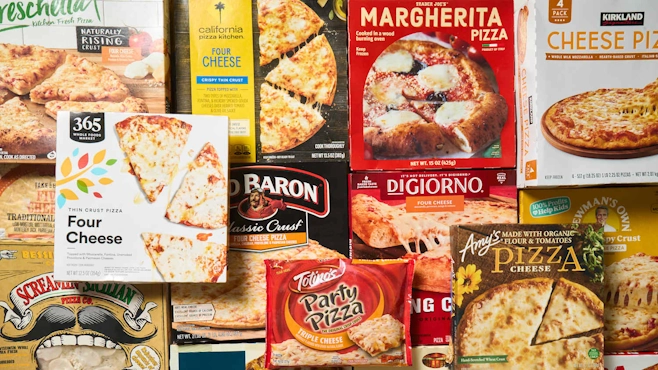
The “healthiest” frozen pizza is the one that keeps sodium and saturated fat reasonable, delivers real satisfaction (protein + fiber help), and doesn’t rely on a chemistry-set ingredient list. In our rankings, Milton’s Roasted Vegetable Cauliflower Crust Pizza comes out on top for its strong protein/fiber balance and veggie-forward toppings—so it eats like comfort food, not “diet food.” (EatingWell), while Newmans Own and California Pizza Kitchen rank best among the most popular brands.
Frozen pizza will never be kale salad… but it can be a decent dinner when you pick wisely and build a smart plate around it. (More on that below.)
What “healthiest” means for frozen pizza (our nutritionist criteria)
When we’re judging frozen pizzas, we’re basically asking: Does this help you feel good after you eat it? Not just “is it lower calorie?”
Here’s what we prioritize:
- Sodium: This is the #1 issue with frozen pizza. Many options are sky-high. For reference, major guidelines recommend keeping sodium under 2,300 mg/day (and many people benefit from less). (Dietary Guidelines)
- Saturated fat: Pizza can quietly stack saturated fat fast, especially with lots of cheese and processed meats.
- Protein + fiber (staying power): Higher protein and some fiber usually means better fullness and fewer “I need snacks in 45 minutes” situations.
- Toppings quality: Veggie-forward > pepperoni blizzard. If meat is included, “uncured” is still processed meat, but it can be a slightly cleaner label.
- Ingredients you recognize: Not because every additive is “toxic,” but because shorter, simpler lists usually track with less ultra-processing.
Also: pizza can fit a healthy diet – especially when you pair it with vegetables and keep portions realistic. (EatingWell)
The Top 10 Healthiest Frozen Pizzas (ranked)
1) Milton’s Roasted Vegetable Cauliflower Crust Pizza
Why it wins: This one hits the “real dinner” sweet spot: 18g protein and 3g fiber per ½ pizza, with roasted veggies on top. Dietitians have called it a top pick for healthiest frozen pizza for exactly that balance. (EatingWell)
Watch-outs: Saturated fat can be higher (cheese), and sodium is still meaningful (about 700 mg per ½ pizza). (Lowes Foods To Go)
2) Amy’s Roasted Vegetable Pizza (Vegan)
Why it’s great: Veggie-heavy, no meat, and 540 mg sodium per ⅓ pizza with 3g fiber – solid for frozen pizza. (Amy’s)
Best for: Plant-based eaters who still want something hearty.
3) Amy’s Margherita Pizza
Why it ranks high: A relatively simple classic with 530 mg sodium per ⅓ pizza – better than many mainstream pies. (Amy’s)
Tip: Add your own veggies (arugula after baking, peppers/onions pre-bake) to level it up.
4) CAULIPOWER Margherita Pizza (Cauliflower Crust)
Why it’s here: A nice middle ground: 590 mg sodium per serving and a decent macro profile for a frozen option. (Giant Food)
Who it’s for: Gluten-free folks who want “real pizza vibes,” not a sad substitute.
5) Sweet Earth Veggie Lovers
Why it’s strong: Lower saturated fat for pizza (listed 3.5g sat fat on many retail nutrition panels) and veggie-forward. Sodium is still moderate-high (~660 mg). (H-E-B | Here Everything’s Better)
Best move: Pair with a big salad and you’ve got an easy balanced meal.
6) 365 by Whole Foods Market Vegan Veggie Supreme Pizza
Why it makes the list: Lower sodium (450 mg per serving) and 4g fiber, which is genuinely notable in pizza-land. (wholefoodsmarket.com)
Downside: Protein is low (5g), so you’ll feel more satisfied if you add a protein side (edamame, a Greek-yogurt dip, tofu, chicken, etc.). (wholefoodsmarket.com)
7) American Flatbread Tomato Sauce & Three Cheese
Why it’s decent: Cleaner-leaning brand positioning and a reasonable calorie range—though sodium sits around 700 mg per serving (½ pizza in the listing cited). (Fatsecret)
How to eat it “healthiest”: Make it a 2-slice situation, not a whole-pie solo mission.
8) Banza Chickpea Crust Margherita
Why it’s here: Chickpea crust boosts protein and fiber compared to conventional crust. One listing shows 32g protein and 20g fiber per pizza (so about half that per ½ pizza). (Target)
Watch-outs: Sodium can climb (one listing shows 1450 mg per pizza). (Target)
Bottom line: Great “macros,” but not a low-sodium choice.
9) Quest Uncured Pepperoni Thin Crust Pizza
Why it’s here: If your #1 goal is high protein + high fiber, this is a monster (EWG lists 28g protein and 18g fiber per ½ pizza). (EWG)
Why it’s not higher: Also 950 mg sodium and 8g saturated fat per ½ pizza. (EWG)
Translation: Fantastic for fullness, less fantastic for everyday heart-health.
10) Amy’s Cheese Pizza
Why it sneaks in: A simple, familiar option that’s not as sodium-bonkers as many conventional brands. Amy’s lists 630 mg sodium (per serving on the nutrition panel). (Amy’s)
Make it healthier fast: Add mushrooms, onions, spinach, or side salad – done.
How to make any frozen pizza healthier (without ruining your life)
- Use the “plate math”: Aim for ½ plate vegetables, ¼ plate pizza, ¼ plate protein (if your pizza is low on protein).
- Add vegetables like you mean it: Throw on frozen peppers/onions, spinach, mushrooms before baking.
- Balance sodium: If you know pizza night is salty, keep the rest of the day lighter on packaged foods. Staying within sodium recommendations most days matters more than one meal. (Dietary Guidelines)
- Portion like a grown-up, not a college freshman: Many nutrition panels assume 2–4 servings per pizza. Actually look at the serving size.
References
- Dietary Guidelines for Americans (2020–2025) Executive Summary: sodium limit <2,300 mg/day. (Dietary Guidelines)
- American Heart Association: sodium guidance (2,300 mg/day; ideal 1,500 mg for many adults). (www.heart.org)
- EatingWell (dietitian guidance on pizza in a healthy diet). (EatingWell)
- Nutrition facts used for brand comparisons: Milton’s (retail nutrition panel) (Lowes Foods To Go); Amy’s product nutrition pages (Amy’s); CAULIPOWER nutrition listing (Giant Food); Sweet Earth nutrition listing (H-E-B | Here Everything’s Better); Whole Foods 365 vegan pizza nutrition facts (wholefoodsmarket.com); American Flatbread nutrition listing (Fatsecret); Banza nutrition listing (Target); Quest nutrition facts (EWG panel) (EWG)
How the Most Popular Frozen Pizza Brands Rank (Health-Wise)
These brands dominate freezer aisles, but popularity ≠ nutrition quality. I’m ranking them relative to each other, not against the top-10 healthiest pizzas above.
Overall Ranking (Healthiest → Least Healthy)
- Newman’s Own
- California Pizza Kitchen (CPK)
- Freschetta
- DiGiorno
- Red Baron
- Tombstone
Here’s why.
1) Newman’s Own (Best of the “Big Brands”)
Relative health ranking: ⭐⭐⭐⭐☆
Why it ranks highest:
Newman’s Own tends to:
- Use simpler ingredient lists
- Keep sodium slightly lower than most mass-market competitors
- Avoid extreme saturated fat levels (depending on variety)
Many Newman’s Own pizzas land around 700–800 mg sodium per serving, which isn’t “low,” but is noticeably better than the worst offenders. Veggie-forward options do best here.
Nutritionist verdict:
If you’re shopping mainstream brands and want the least-bad option, Newman’s Own is usually your best bet.
2) California Pizza Kitchen (CPK)
Relative health ranking: ⭐⭐⭐⭐☆
Why it does fairly well:
CPK pizzas are often:
- More portion-aware (thinner crusts, less cheese overload)
- Higher in flavor complexity from herbs, veggies, and sauces rather than just salt
That said, sodium is still typically 700–900 mg per serving, and saturated fat can climb quickly with cheese-heavy varieties.
Nutritionist verdict:
Better ingredient diversity and portions than most big brands – just don’t eat half the pizza without checking the label.
3) Freschetta
Relative health ranking: ⭐⭐⭐☆☆
Why it lands in the middle:
Freschetta sits right between “somewhat reasonable” and “classic frozen pizza excess.”
Pros:
- Better texture and ingredient quality than bargain brands
- Some thin-crust options are more reasonable
Cons:
- Sodium often 800–1,000 mg per serving
- Saturated fat can spike fast
Nutritionist verdict:
Not terrible, not great. Fine if balanced with vegetables and smart portions.
4) DiGiorno
Relative health ranking: ⭐⭐☆☆☆
Why it drops lower:
DiGiorno’s calling card is thick crust + lots of cheese, which means:
- Higher calories
- Higher refined carbs
- Higher saturated fat
- Sodium frequently 900–1,200 mg per serving
The “rising crust” is delicious – but nutritionally, it’s the opposite of subtle.
Nutritionist verdict:
More of a comfort-food splurge than a regular frozen staple.
5) Red Baron
Relative health ranking: ⭐⭐☆☆☆
Why it ranks poorly:
Red Baron pizzas tend to be:
- High in processed meats
- High in sodium
- Low in fiber
- Heavy on refined flour and oils
Sodium often hits 1,000+ mg per serving, especially with pepperoni or sausage varieties.
Nutritionist verdict:
Classic frozen pizza nostalgia – but nutritionally outdated.
6) Tombstone (Least Healthy)
Relative health ranking: ⭐☆☆☆☆
Why it ranks last:
Tombstone consistently shows:
- Very high sodium
- High saturated fat
- Minimal fiber
- Heavy processing
Many varieties approach or exceed 1,200 mg sodium per serving, meaning half a pizza can blow past half your daily sodium limit.
Nutritionist verdict:
This is squarely in “occasional indulgence” territory, not something to build into a regular routine.
Quick Nutritionist Cheat Sheet
- Best mainstream brand: Newman’s Own
- Best for thinner crust & portion control: California Pizza Kitchen
- Most indulgent / comfort-food: DiGiorno
- Highest sodium offenders: Tombstone, Red Baron
- Most likely to pair well with a salad: Newman’s Own, CPK
Bottom Line
If your freezer choices are limited to big-name brands:
Newman’s Own or California Pizza Kitchen → acceptable weekly option
Freschetta or DiGiorno → occasional treat
Red Baron or Tombstone → true “once in a while” food